
According to TrendForce, surging memory and CPU costs could push mainstream laptop retail prices up by nearly 40% in 2026. The firm modeled a laptop with a $900 MSRP and found that DRAM and SSD (normally around 15% of a device’s bill of materials) have ballooned to over 30% following several quarters of sharp price increases. That alone could force retail prices up by more than 30% if brands want to hold their margins.
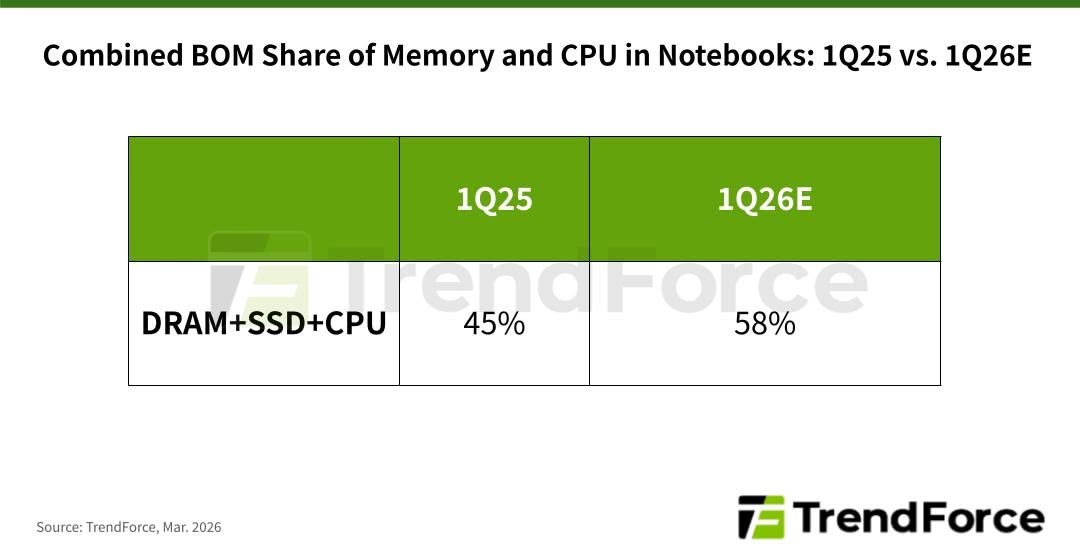
Intel has raised prices on entry-level and older-generation laptop CPUs by more than 15%, notes the report, with further hikes planned for mainstream and higher-end platforms in the second quarter. When combined, memory and CPU could end up accounting for 58% of laptop component costs, up from roughly 45%.
Apple designs its own silicon, which gives it considerable insulation from Intel-driven CPU volatility. The MacBook Neo’s A18 Pro chip, for instance, is produced by TSMC under Apple’s direct supply agreements. But Apple is not immune to memory market pressures – DRAM and NAND flash costs affect Macs across the line, from the Neo’s fixed 8GB of RAM to the high-capacity configurations in the MacBook Pro.
Just last week, Apple removed the 512GB memory upgrade option when purchasing a Mac Studio, with the machine now maxing out at 256GB. The latter option also got a price rise – it used to cost $1,600 to go from 96GB to 256GB on the high-end M3 Ultra machine, but now it costs $2,000.
TrendForce notes that “tier-one brands” with deep supplier relationships are most well-positioned to deal with the price squeeze. That bodes well for Apple, but killing off the Mac Studio upgrade option shows it’s not completely invulnerable to broader market pressures.
This article, “Apple Holds an Edge as Laptop Prices Could Face a 40% Increase” first appeared on MacRumors.com
Discuss this article in our forums