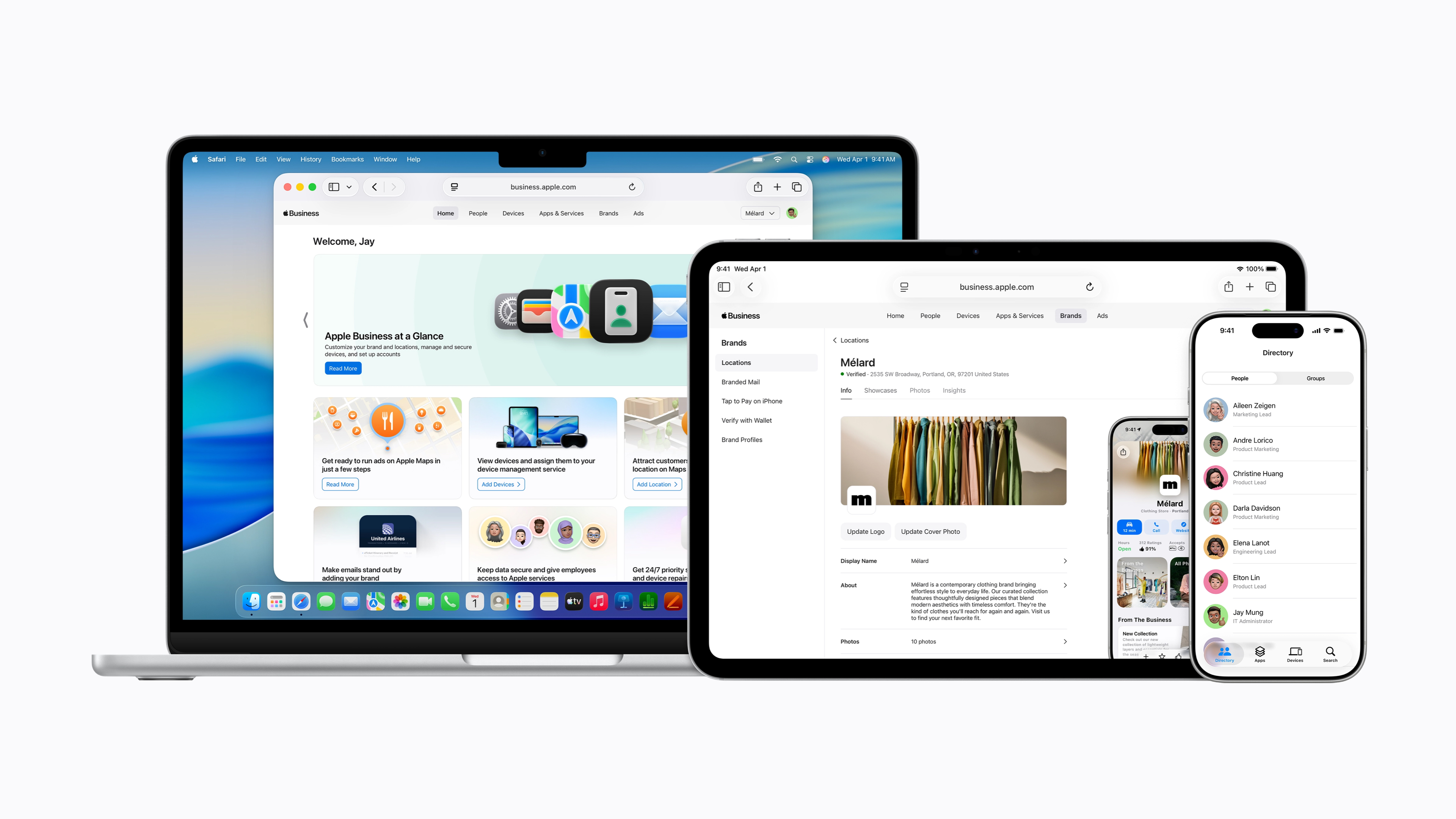
The service is designed to be a consolidated replacement for several of Apple’s existing business-focused offerings, including Apple Business Essentials, Apple Business Manager, and Apple Business Connect. It provides organizations with a single interface to manage devices, employees, communications, and customer engagement across Apple’s ecosystem.
Apple Business incorporates built-in mobile device management (MDM), which allows companies to configure device settings, security policies, apps, and user groups from one place. Apple Business app will allow employees to install work-related apps, access colleague contact information, and request support.
New “Blueprints” enable administrators to preconfigure devices with specific settings and apps, facilitating zero-touch deployment so that employees can begin using devices immediately after unboxing. Zero-touch deployment is available when devices are purchased through Apple or authorized resellers.
The platform introduces Managed Apple Accounts with what Apple describes as “cryptographic separation” between personal and work data, allowing employees to use the same device for both purposes without commingling information. Account provisioning can be automated through integrations with identity providers such as Google Workspace and Microsoft Entra ID.
Additional features include the ability to create user groups, assign roles, distribute apps through the App Store, and access an Admin API for large-scale deployments, covering device, user, audit, and MDM service data.
Apple Business also adds integrated email, calendar, and directory services tied to custom domains. Businesses can either bring an existing domain or purchase one through the platform. These tools include features such as calendar delegation and a company directory with personalized contact cards.
In addition to internal management tools, Apple Business introduces new tools for customer engagement. The platform will allow businesses to manage how their brand and locations appear across Apple services, consolidating features previously available in Apple Business Connect.
These include brand profiles with logos and details, customizable place cards in Apple Maps with photos, hours, and actions such as ordering or reservations, and analytics showing how users discover and interact with locations. Branded communications will extend to the Mail app and iCloud Mail, as well as order tracking in Wallet, and that businesses using Tap to Pay on iPhone can display their branding during transactions.
Apple also announced a new advertising feature tied to Apple Maps, scheduled to launch in the United States and Canada later this summer. Businesses will be able to create ads that appear at the top of search results in Maps, as well as within a new Suggested Places experience.
Apple Business will be available starting April 14 in more than 200 countries and regions as a free service for new and existing users of its prior business platforms, with certain features limited to specific regions. Optional paid services for additional iCloud storage and AppleCare+ will remain available within the platform.
Apple Business Essentials, Apple Business Manager, and Apple Business Connect will be discontinued once Apple Business launches, with existing data such as claimed locations and account information automatically migrated to the new system. Business Essentials customers will no longer be charged monthly fees for device management after the transition.
This article, “Apple Unveils ‘Apple Business’ All-in-One Platform” first appeared on MacRumors.com
Discuss this article in our forums