The Dynamic Island will replace the notch, leaving more available screen space for content. As with the iPhone’s Dynamic Island, the Mac Dynamic Island will be interactive and it will contextually expand based on the app or Mac feature in use.
Apple is updating macOS to make it more touch friendly. Users will be able to tap or click on-screen elements, and controls will change based on input method. If a user taps on a menu bar item, for example, it will display a larger set of controls optimized for touch. Touch-based options will be integrated throughout macOS, and it will support iPad features like pinch gestures for zooming in or out and fast scrolling.
The new MacBook Pro will be the first Mac that supports touch gestures on the display, despite Apple’s insistence over the years that it would not bring touch-based technology to the Mac. Apple did experiment with an OLED Touch Bar in prior MacBook Pro models, but ultimately removed it after it proved to be unpopular. Apple apparently is not going to advertise the MacBook Pro as a touch-first device like the iPad, and will let customers use touch and mouse gestures interchangeably for all functions.
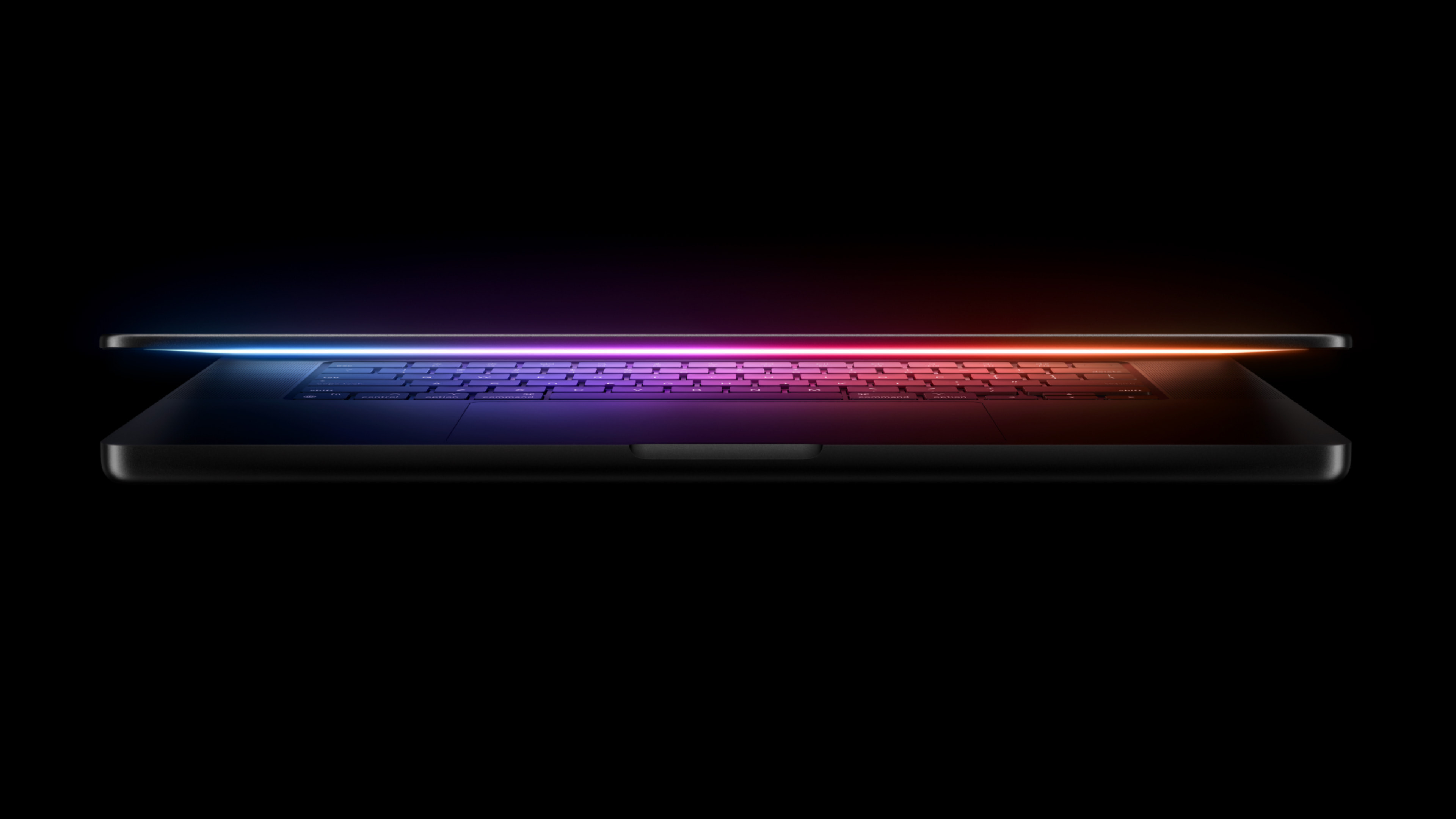
Along with a touchscreen and OLED display technology, the MacBook Pro could have an updated design with a slimmed-down chassis, but it will look a lot like the current MacBook Pro. Apple is not removing the keyboard or the trackpad, and sizes aren’t expected to change. Apple is planning for OLED versions of both the 14-inch and 16-inch MacBook Pro models.
Apple plans to update the MacBook Pro with M5 Pro and M5 Max chips this spring, but the OLED MacBook Pro models will adopt the M6 Pro and M6 Max chips, built on Apple’s new 2-nanometer process. The OLED MacBook Pro models are expected to launch toward the end of 2026, so Apple is planning for two MacBook Pro refreshes in 2026.
This article, “Touchscreen OLED MacBook Pro Coming in 2026 With Dynamic Island and Redesigned macOS Controls” first appeared on MacRumors.com
Discuss this article in our forums